Time to read: 15 minutes.
This is slightly longer than I usually allow myself to post! But it’s the first weekly newsletter in a while and I had a lot to say.
In this week’s newsletter:
The Timbit Times
Kate Film Club, 33 of 52: “Suddenly, Last Summer” (1959)
Book of the Week: “Le Petit Prince”
French Study
The more I trust my instincts, and my review of the literature, and I make real gains in my recovery from Lyme disease by implementing what I learn, the more I feel anger over being dismissed by our medical system for so long. And for letting their dismissal and gaslighting turn into self-dismissal and self-gaslighting, which caused me very real physical harm and completely upended life as I knew it. In today’s newsletter intro, I wanted to talk about how to protect one’s own health outcomes in an often hostile medical system, and in a society that too often insists on sweeping its failures under the rug. But as I wrote, it turned into its own full-length blog post!, so that’ll have to wait for another time. So today, let me simply catch you up on some interesting recent discoveries and wins in my little N of 1 scientific adventure.
It’s perhaps just as well I didn’t get this newsletter out last Sunday, because I would’ve left everybody hanging on an important update for a whole week. I’ve been making some energy baseline gains in the past couple weeks and it’s beginning to seem like I maybe can actually trust them—in the sort of way where you gingerly start putting weight back on an injury, seeing if it’s ready to indeed hold that weight ok or not, mentally preparing yourself for either outcome, either message from your body.
The week before last (the week ending last Sunday, April 19), I went for three short walks that week, all about 0.5-0.6 miles. I haven’t walked that much in a single week in about five years. And Sunday, I did something particularly interesting that I hadn’t done at all (at least not intentionally) since becoming big sick. I wrote for several hours that day, basically a full day’s worth of cognitive work, and by 5p I felt definitely cognitively tired, and somewhat physically tired. A friend asked if I wanted to try walking to a little outdoor bar nearby our building to end the day. Even just a few months ago, that would have been an easy “no”. But now?, hrm.
I was curious because: for several years, spending further from the physical energy bucket, once I’ve already spent enough from the cognitive energy energy bucket to feel a bit physically tired, would have been a foolish decision guaranteed to end in a seriously risky metabolic crash the next day. But when I presented the options to my body, I didn’t get outright rejection of the idea. (This pre-visualization exercise is something I picked up from a Whitney Dafoe blog post a few years ago, and am increasingly relying on to keep me safe—as safe as anybody can be anyway—in exploring my energy baseline increases.) My body felt lukewarm about the short walk to the bar, but very interested in the idea of the specific CBD soda I knew I’d have there. So I decided to give it a go—it helped a lot that the friend I was walking with knows my illness very well and reassured me I could stop and turn around at any point, and/or they’d even go back to get my wheelchair to wheel me home if they really had to! We kept checking in on my heart rate and how my body felt the whole short walk to the bar, and I managed to make it there fine.
And the wild thing was, after sitting outside and having the CBD soda while chatting with my friend, my body actually felt better—a bit more energized and resourced again—than it had before I’d walked over. I know this is a normal way for bodies to respond, that sometimes a small amount of movement can actually replenish energy, but I had not experienced that in a very long time. It felt like the sort of culture shock you get not in going abroad, but in coming back home after being abroad for years. I went to bed in a great mood, but unsure about what the next morning would bring. (I usually only find out the next morning if I overspent my energy in a given day.) But Monday morning, I woke up feeling impressively not-crashy. I was a little more tired than usual, which suggested that maybe I shouldn’t have pushed it quite so hard the previous day (either cognitively or physically), but I wasn’t being made to pay severely and dangerously in the way that a small over-exertion used to be met with. This is a seriously impressive step up in my recovery.
And not only did I not find myself in a crash Monday morning, but my energy baseline this past week has continued to be about the same as it was the prior week! At this point you’re probably wondering, well heck, what did Kate add recently that resulted in this new recovery step up?!, and this is where we come full circle to how I started today’s intro: I’m lucky to have good medical providers albeit after several years of searching, but even now still, many of my biggest gains in recovery are coming from my own ideas and initiative.
This big game-changer that I added two weeks ago was l. plantarum 299v. Even before becoming big sick, I’d had gut issues for as long as I can remember, and this probiotic really helped with reducing bloating and improving intestinal motility for me. I swore by it for years, but at some point in my early 30s I stopped taking it. (Perhaps I moved and it was harder to find at my new grocery store options, I don’t quite remember.) Anyway, I’d had it on my list since becoming big sick as something that I’d like to try adding back in, and I just recently felt like the time was right to give it a go.
The same day that I took the first dose, I noticed a marked improvement in mood, as well as in my ability to start, pause, and switch tasks. So much so that at first I seriously wondered “what is going on today? this is so weird”, before remembering I’d started the probiotic that morning, which is a known dopamine producer. Besides the obviously dopamine-driven cognitive improvements however, I was also noticing a significant improvement in my “muscle molasses”. That’s the symptom where I constantly feel like every muscle in my body is fighting its way through a vat of molasses whenever it’s moving. I was experiencing way less of that resistance in my muscles, and I started to wonder if my new probiotic was influencing that too. I started to do an internet search for “does dopamine influence muscle function”, but of course right up top was the Parkinson’s and L-Dopa connection. Yes!, dopamine plays a significant role in muscle function!
So anyway, this probiotic that I restarted in order to improve gut function (it’s also helping with that!) turned out to be another meaningful step forward in my overall recovery. Who’d have guessed? I share all this because I hope it encourages other ill folks to take their treatment into their own hands, at least sometimes, at least in small ways. I’ve still got a long ways to go, but getting more frequent short walks and an increased daily capacity for cognitive work is a big boost.
The Timbit Times
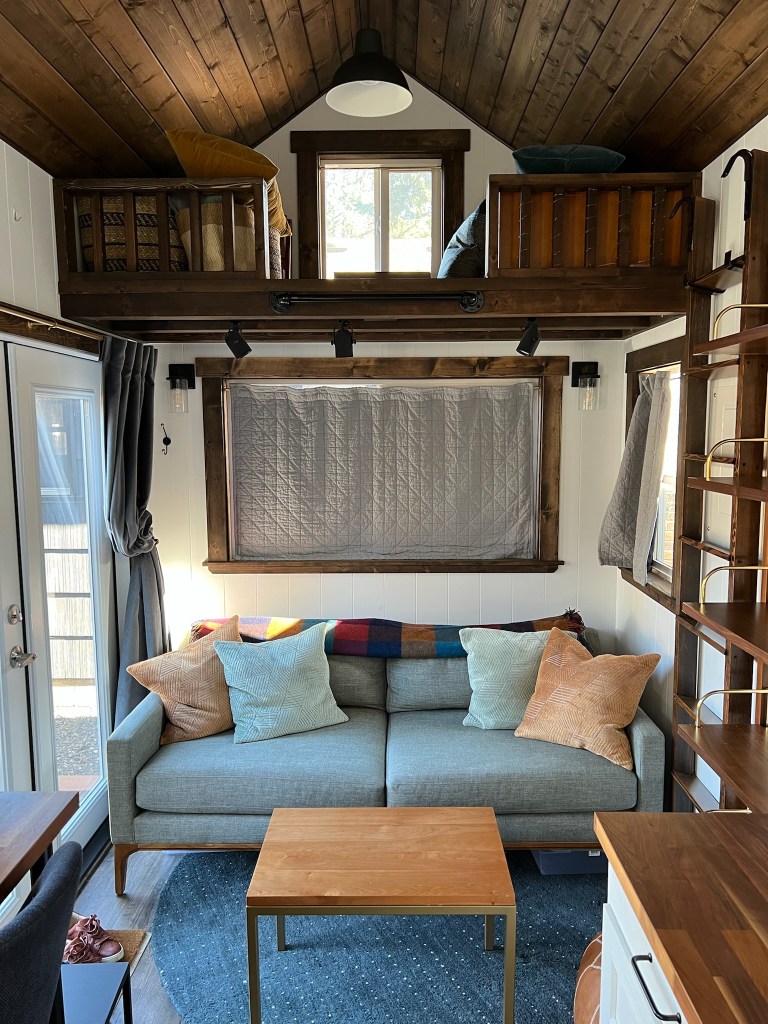
It is with a heavy heart that I’m selling my tiny home! If you have any interest in buying it, find me on Bluesky and let’s chat. (My handle there is my blog domain.) I will miss it terribly, and I wish my financial situation was such that I could buy a plot of land to stick it on and keep it for myself, alas. I’m selling it furnished, so the home is in turnkey condition. I’m hoping to find a buyer who will love the home as much as I did!
Kate Film Club, 33 of 52: “Suddenly, Last Summer” (1959)
I’m gonna be frank with you: this is an intensely weird movie. It is well-made and the performances are excellent, but it is…bleak, macabre, and just plain odd. It is based on a play by Tennessee Williams and in my opinion kind of suffers for being stretched out to feature film length. I was often left wondering if anything was going to happen or if this was more an environmental mood sketch than a movie with a plot.
The film focuses on Catherine (played by a young Elizabeth Taylor) who is in a mental institution for vague reasons. Her rich aunt (Katharine Hepburn) is pushing for her to get a lobotomy, and is attempting to financially coerce the institution to make it happen. Major creep vibes. The aunt’s son, Catherine’s cousin, died several months prior, and we’re clued into the fact that that may have something to do with what’s currently going on. This is honestly much of the plot of the movie, except for the big reveal at the end, which you sort of but not entirely see coming by the time you get there. You’ll expect the basics of the ending, but the details are exceptionally grim.
Hepburn and Taylor both got Academy Award nominations for their performances, rightfully so—the performances were great even though the script was tiresome—and Taylor won a Golden Globe. But this movie as a whole didn’t really have much to say. There’s two ways you could interpret it—one is that it’s simply sensationalistic smut with a side of homophobia. The other is that it’s a pointed take on the nature of living beings, humans and the animal kingdom combined, asserting that at our cores, none of us are anything other than violent creatures seeking to sate our own needs (still with a side of homophobia). If I wanted to try to draw a less nihilistic message from this work, I could maybe conjure something like “what we consume, consumes us, so choose wisely”; but if that’s what the movie was going for, I don’t think it really succeeded. It felt like it was a movie superficially designed to shock, and to make our more violent sides feel inevitable, and that’s it.
Rating: 2.5/5. Narratively flat but well-performed. Well-performed but narratively flat.
Where to watch: Streaming on Apple and Amazon.
Quote: “How much are you willing to pay for that, Aunt Vi?”
Book of the Week: “Le Petit Prince”
(By Antoine de Saint-Exupéry, 1943. Read in French; English translations available.)
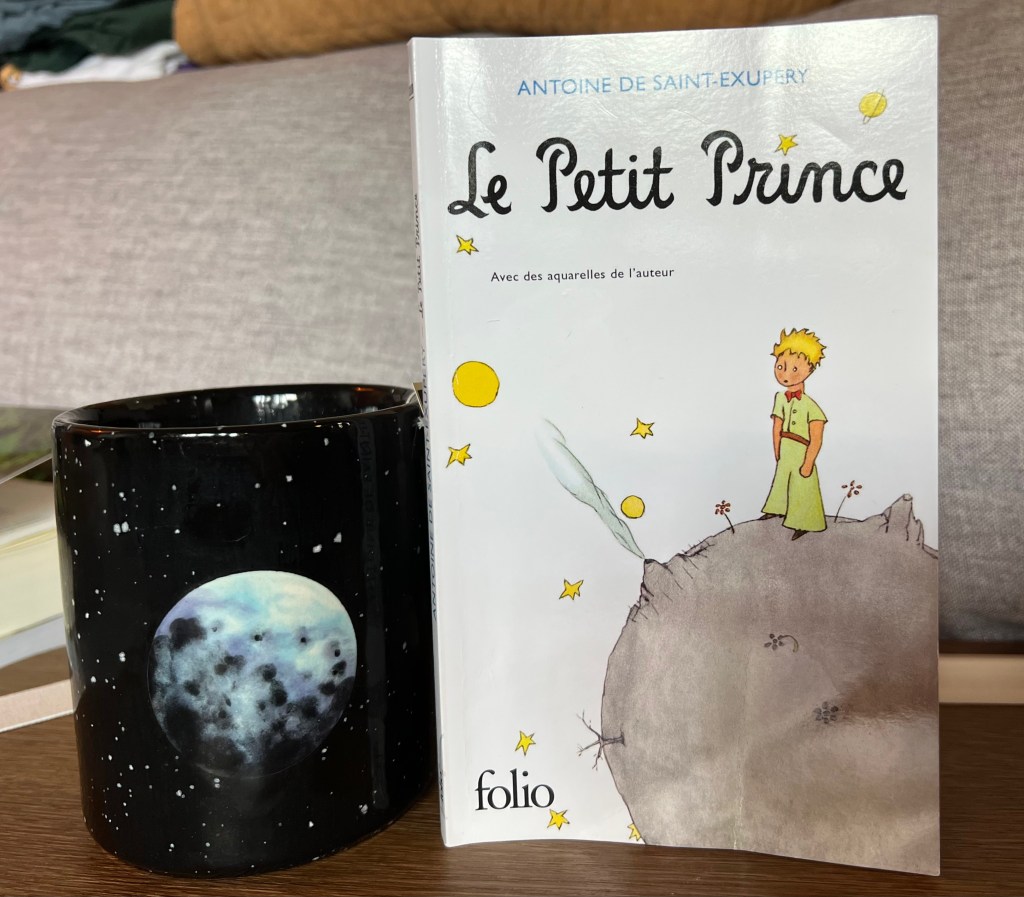
“Le Petit Prince” is the second-most translated work in the world, for good reason, and there’s probably not much I can say about it that hasn’t already been said. Similar to probably most fans of the book, I loved the connection to child-like thought, right from the dedication onwards. I say “child-like” because I don’t think the sort of thought in the book—sincere, questioning, clarifying—belongs exclusively to children. Adults can maintain the open-spiritedness that comes more easily to children, if they want to. Unfortunately, many decline this opportunity, in favor of adhering by default to rigid social expectations, and outsourcing any deeper thought to authority figures and/or celebrities.
The author, however, seems to have been an adult who indeed maintained that child-like openness and drive for meaningful understanding of the world. And the conversations his little prince has while traveling to different planets where Very Serious Adults are doing Very Serious Jobs for seemingly no substantive reason reminds me of my own difficulty sometimes, in being an autistic adult trying to converse across the meta-philosophical divide with neurotypical people. This divide has only widened with the wisdom my illness years have brought me—I wish so much I could help my middle-aged peers understand the life truths I’ve unearthed while sick, while they still have time to do something with the insights. But much like the Little Prince and the Very Serious Adults, while we may physically inhabit the same reality, we inhabit very different ones on the level of understanding and thinking about said reality.
The other theme that stuck with me from this book was that we make things meaningful to us by the time and care we put into them. This is a blueprint for how to build a meaningful life, but it also overlapped at the time for me with an idea that was already percolating in my head. That is, the difference between Who Someone Is, versus Who They Are To You, and the necessity of being able to both distinguish between the two while at the same time still holding both in your head. I finished this book late last year around the time I had to say goodbye to my main doctor of 4 years because I was priced out of their practice, and that context provides a helpful example to illustrate this idea. We’ll call them Dr. X.
Who Dr. X Is: a brilliant and dedicated but sometimes scattered doctor who needed someone else to manage and track the roadmap, to remind them of things they themself had already put in the roadmap, in order to get the best out of working with them. An exceptional expert in complex illness generally, but not a Lyme specialist.
Who Dr. X Was To Me: Someone who had always been there and always had my back and made themself available even when they didn’t have answers. Someone I’d made many, many ER go-no-go decisions with. A doctor who had invested time, and effort, and provided many kind words when I was feeling down and hopeless and scared. Someone who played a bigger role in saving my life than any other doctor I’ve ever met. A doctor whose missing roadmap management skills didn’t really matter to me because I was capable of covering that work myself.
And neither of those framings negates the other, you know? Just because Dr. X had meant the world to me, does not mean that they may mean something different to someone who didn’t come into their illness pre-baked with years of professional skill in product management. And vice versa, just because they had limitations in some areas, does not mean they cannot mean the world to me. Dr. X will always be the doctor that saved my life, even though Dr. X wasn’t going to be the doctor that fully got me better. I had to hold all of this in my head when making the difficult decision to leave their practice, and emotionally caring for myself in the aftermath of that decision. It was the right decision, and it really stung. Both things are true.
So I suppose to liberally botch the well-known quote from this book: “It is only with the heart that one can see rightly; what is essential is invisible to the eye”—what I’ve taken away from “The Little Prince” is actually this: to live well in this world involves both subjective and objective experience. The heart is essential, and so is the mind. And if you listen to and integrate both, together, they’ll help you figure it all out.
Rating: 5/5 – Pitch perfect in every way.
French Study
Last autumn, as I started seeing the first real significant returns on my Lyme treatment, I signed back up where I’d left off in the formal B2 level track at the Alliance Française. I’ve been able to keep up with the twice-weekly classes ever since, and I just recently started the last course at the B2 level! This is some of the most fun I’ve had yet in taking classes, because this is now the third term I’ve been with largely the exact same classmates and we’ve all gotten to know each other. Last term we even met outside of class a couple times to practice our conversational skills, and I hope that we’ll find time to do the same again soon! It’s the loveliest group of mostly Boomers I’ve ever spent time with, ha. There’s a couple other Millennials and Gen X-ers in the mix, but as you might expect—a lot of retirees! We’re a motley crew and we have a good time.
One thing that’s increasingly noticeable at my level is the disconnect between my abilities in comprehension and production—that is, my ability to read or listen versus my ability to write and speak. I don’t want to do the language-learning equivalent of skipping legs day at the gym, so I also signed up for a weekly conversation lab class at another place. Ninety minutes each week of very small group conversation has been helping a lot, but I also think more frequent writing practice will help, too. So I’m hoping to start a near-daily journaling practice in French—just a paragraph or two about my day. I think at this point, just practicing the generation of words is more important than getting everything I write corrected in detail. Correctness can come later, once I’m better at expressing myself at all to begin with!

